
Know Your Garden Zones: Where to Plant What

Gardening · Design · Plant Placement
Know Your Garden Zones: Where to Plant What for Plants That Actually Thrive
The Garden Scroll · Garden Planning · 10 min read
I spent years chasing the look of other people’s gardens instead of understanding my own. I’d see a lush hydrangea in a magazine, plant it in full afternoon sun, and watch it sulk for a season before giving up. I’d tuck shade-lovers against the south-facing wall because there was a nice gap there. Results: predictably disappointing.
The turning point was a simple exercise — I walked my entire garden with a notebook over the course of three days, noting where the sun fell at 8am, noon, and 4pm. That sketch became the foundation of every planting decision since, and the garden became a different place. Plants stopped struggling. They thrived.
The First Step: Map Your Light
Before you buy a single plant, understand your light. Not roughly — specifically. The terms matter:
Full sun means 6+ hours of direct sun per day. Part sun / part shade means 3–6 hours. Full shade means under 3 hours of direct sun. Most garden failures trace back to misreading this. A spot that gets morning sun for 2 hours is not “part sun” — it’s shade-leaning, and needs to be treated that way.
Tools That Actually Help
You can do a manual sun audit with a notebook, or use modern tools that make it faster and more accurate. A good soil probe combined with careful observation gives you both light and soil moisture data — the two most critical variables in plant placement.
🌡️
Giraffe Tools Soil Moisture & pH Meter
Test soil conditions at every planting zone before you commit. Knowing pH and moisture helps match plants to spots precisely — not just by sun, but by soil chemistry.Shop Giraffe Tools →
💦
Giraffe Tools Retractable Garden Hose
Once you’ve mapped your zones, efficient watering is key. Giraffe Tools’ retractable hose reaches all corners of your garden without tangling.Shop Giraffe Tools →
📋
Garden Planning Notebook & Mapping Kit
A dedicated garden journal for sun mapping, planting notes, and seasonal records — old-fashioned but indispensable for anyone serious about placement.Shop on Amazon →
🧪
Soil Test Kit (pH & Nutrients)
Beyond light, soil chemistry determines success. A comprehensive test kit tells you whether your soil is acid-loving territory or alkaline — essential for roses, blueberries, and more.Shop on Amazon →
Matching Plants to Zones
Full Sun Zones (South & West Facing)
These are your high-value real estate spots — hot, bright, and often dry. Ideal for roses (modern varieties thrive in 6–8 hours), lavender, salvia, ornamental grasses, rosemary, agapanthus, and most vegetables. In Zone 9, afternoon western sun can exceed what even full-sun lovers enjoy — consider afternoon shade for roses and tomatoes past 3pm.
Part Sun / Dappled Shade Zones (East Facing, Under Deciduous Trees)
Morning sun with afternoon protection is the most coveted garden real estate in Zone 9. Use it for hydrangeas, impatiens, ferns, columbine, hellebores, Japanese maples, and most camellia varieties. This is also perfect for an outdoor seating area — you’ll thank yourself in summer.
Full Shade Zones (North Facing, Under Evergreens)
Shade gardens are underused and underappreciated. Hostas, begonias, astilbe, ferns, bleeding heart, and sweet woodruff can create extraordinary texture and color without any direct sun. The key is soil amendment — shade zones under large trees often have dry, root-competed soil that needs organic enrichment.
Slope & Wall Zones
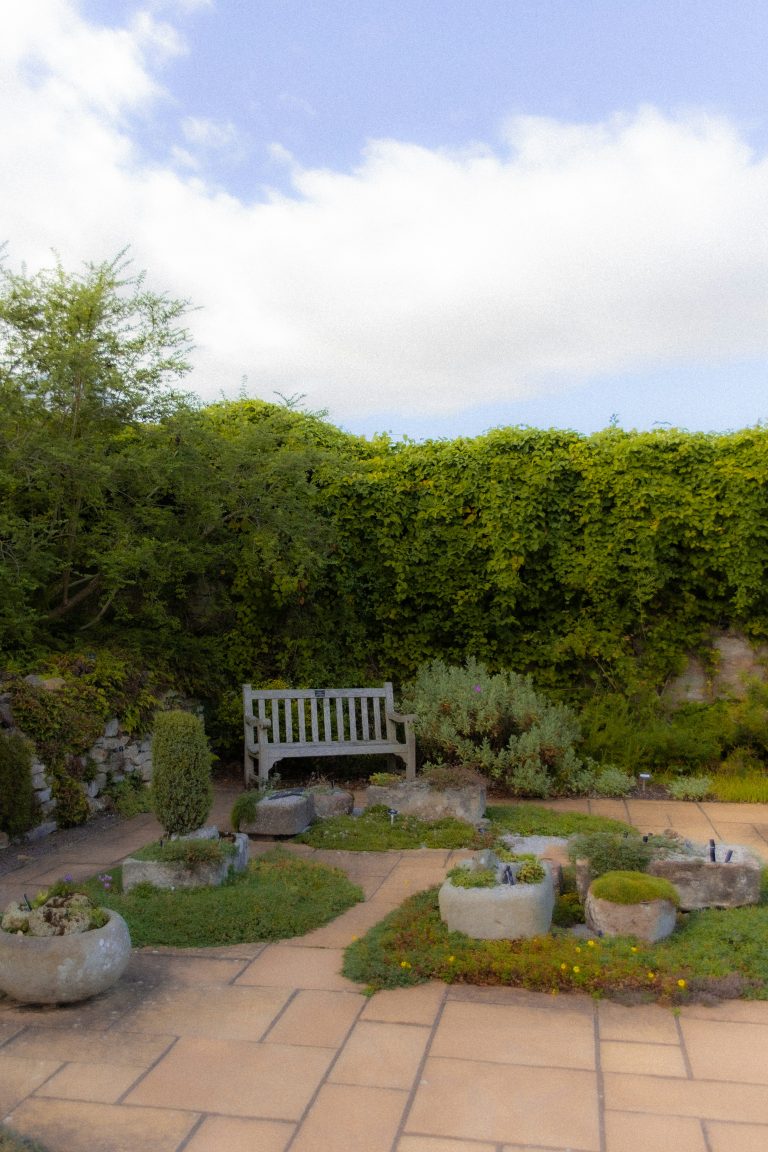
Stone walls and slopes create microclimates. South-facing stone walls absorb heat during the day and radiate it at night — excellent for tender Mediterranean plants like rosemary, thyme, and climbing roses. North-facing walls stay cool and moist — pair with ferns and moss plants that appreciate consistency.
The right plant, right place rule: A plant in its ideal zone needs less water, less fertilizer, fewer interventions, and fewer rescues. It will outperform a wrong-placed plant that receives three times the attention. Placement is the highest-leverage gardening decision you make.
Drainage: The Hidden Variable
Sun gets all the attention, but drainage failures kill more plants than incorrect light. Test drainage by digging a hole 12 inches deep, filling it with water, and seeing how long it takes to drain. If water sits for more than an hour, you have drainage issues. Raised beds, amended soil, or selecting naturally wet-tolerant plants are your solutions.
🏗️
Raised Garden Bed Kit
Solve drainage and soil quality issues simultaneously. Raised beds let you control soil composition entirely — ideal for problem zones.Shop on Amazon →
🌱
Premium Garden Compost
The universal soil amendment. Add generous compost to any zone to improve drainage in clay, moisture retention in sandy soil, and feed plants long-term.Shop on Amazon →
🔦
Digital Light Meter for Plants
Takes the subjectivity out of sun audits — measure exact foot-candles in every garden zone to make precise planting decisions.Shop on Amazon →
🌿
Giraffe Tools Sprinkler System
After mapping your zones, set up zone-specific watering — sun zones need more frequent irrigation than shade zones. A reliable sprinkler system makes this effortless.Shop Giraffe Tools →
The garden that works with its site rather than against it is an easier garden — and a more beautiful one. Take the time to understand your light, test your soil, study your drainage. Then plant with confidence. The plants will do the rest.
Disclosure: This post contains affiliate links from Amazon and Giraffe Tools. I only recommend products I genuinely use or believe in.